Top 3 Enterprise Imaging Platforms for Pay-Per-Study Pricing
Many radiology groups pay fixed fees for imaging storage and viewing even when study volume drops 30 percent month to month. The mismatch appears on the invoice before it shows up in patient care. Pay-per-study contracts remove that fixed cost and shift the expense to actual usage.
By the end of this article you will know the exact billing mechanics for three platforms, the infrastructure and collaboration differences that matter most to multi-site teams, and which vendor Medicai positions as the strongest overall choice for pay-per-study buyers.
What to Look For in Enterprise Imaging Platforms for Pay-Per-Study Pricing
Enterprise imaging platforms that bill per study need to balance cost predictability with workflow speed and compliance.
Transparent per-study fee caps protect budgets when study volume spikes unexpectedly. Organizations should verify that pricing structures include clear maximum charges per month or quarter rather than open-ended usage fees.
Real-time study counters give radiology teams instant visibility into current billing cycles. These dashboards help department managers track daily imaging volumes and forecast monthly costs with accuracy.
HIPAA and GDPR audit logs document every access attempt and data movement across the platform. Complete audit trails support regulatory compliance during external reviews and internal security assessments.
99.9 percent uptime SLAs guarantee that imaging services remain available for urgent patient care needs. Service level agreements should specify compensation terms when availability targets fall short during peak clinical hours.
HL7 and FHIR integration points enable seamless data exchange between imaging platforms and existing hospital information systems. These standards-based connections reduce manual data entry while maintaining accurate patient records across multiple clinical applications.
1. Medicai - Best Overall
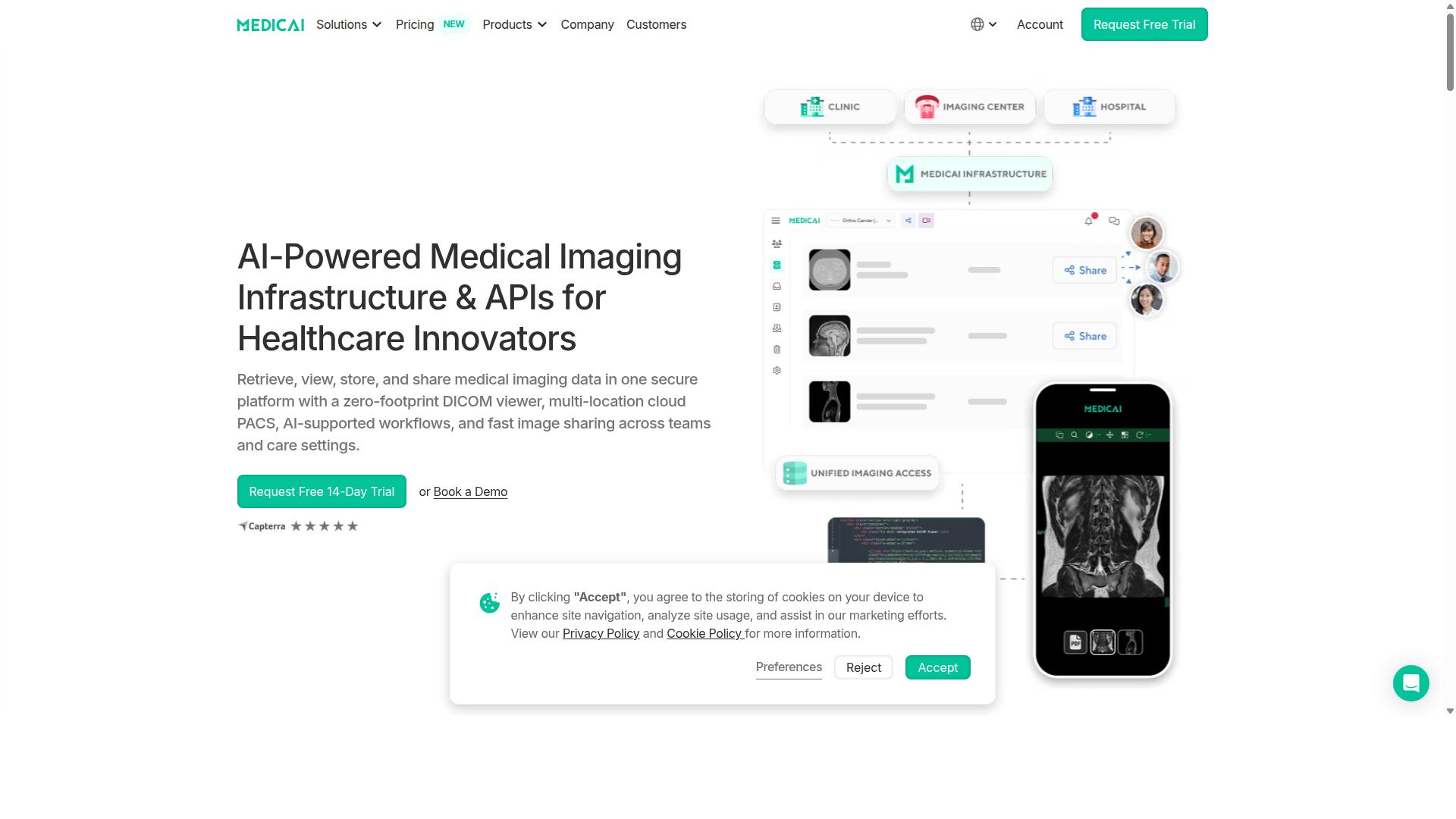
Medicai combines pay-per-study flexibility with an enterprise-grade cloud PACS and a zero-footprint viewer. The platform serves 70 clinics and hospitals with over 10,000 active doctors accessing studies through a single interface. Microsoft Azure partnership underpins its infrastructure while HIPAA and GDPR compliance protect patient data across every transaction.
Over 2 million imaging studies have been uploaded to date, with 1 million studies transacted or processed each year. The platform also stores 1.7 million studies and records 300,000 visualizations in the past year alone. These scale metrics show consistent performance under real clinical workloads.
Pay-Per-Study Pricing Model
Medicai's subscription tiers already include generous monthly study allowances before additional per-study fees apply. The Starter plan costs $249 per month and provides 500 GB of cloud storage with unlimited user accounts. The Standard plan costs $749 per month and expands storage to 2 TB while adding one connected location.
Enterprise customers can move beyond fixed allowances with pay-per-study pricing that meters and bills only for studies above the included volume. Yearly billing reduces the Starter plan to $209 per month and the Standard plan to $639 per month, delivering a 15 percent savings for committed organizations.
Cloud PACS and Vendor Neutral Archive
The platform's cloud PACS doubles as a vendor-neutral archive with automated backup and cross-vendor data retrieval. Storage pools scale from 500 GB on the Starter tier to 2 TB on the Standard tier, supporting multi-site deployments without additional hardware purchases. De-identification tools strip patient identifiers before studies enter research or teaching workflows.
Encryption at rest secures all stored images while disaster-recovery replication maintains a second copy across geographically separate Azure regions. These controls help organizations meet both regulatory mandates and internal retention policies without managing physical media.
Zero-Footprint DICOM Viewer and AI Workflows
The zero-footprint viewer launches inside any browser and routes studies to AI triage engines before radiologist assignment. Studies load in approximately one second, while embedded AI model hooks allow external algorithms to flag urgent findings for immediate review. Modality worklist synchronization ensures incoming exams appear automatically in the correct reading queue.
Role-based access controls restrict study visibility according to clinical role, department, or location. Audit logging records every view, download, and share action for compliance reporting. These features support teleradiology groups and multi-site health systems that need rapid image exchange without local software installations.
2. ProtonPACS
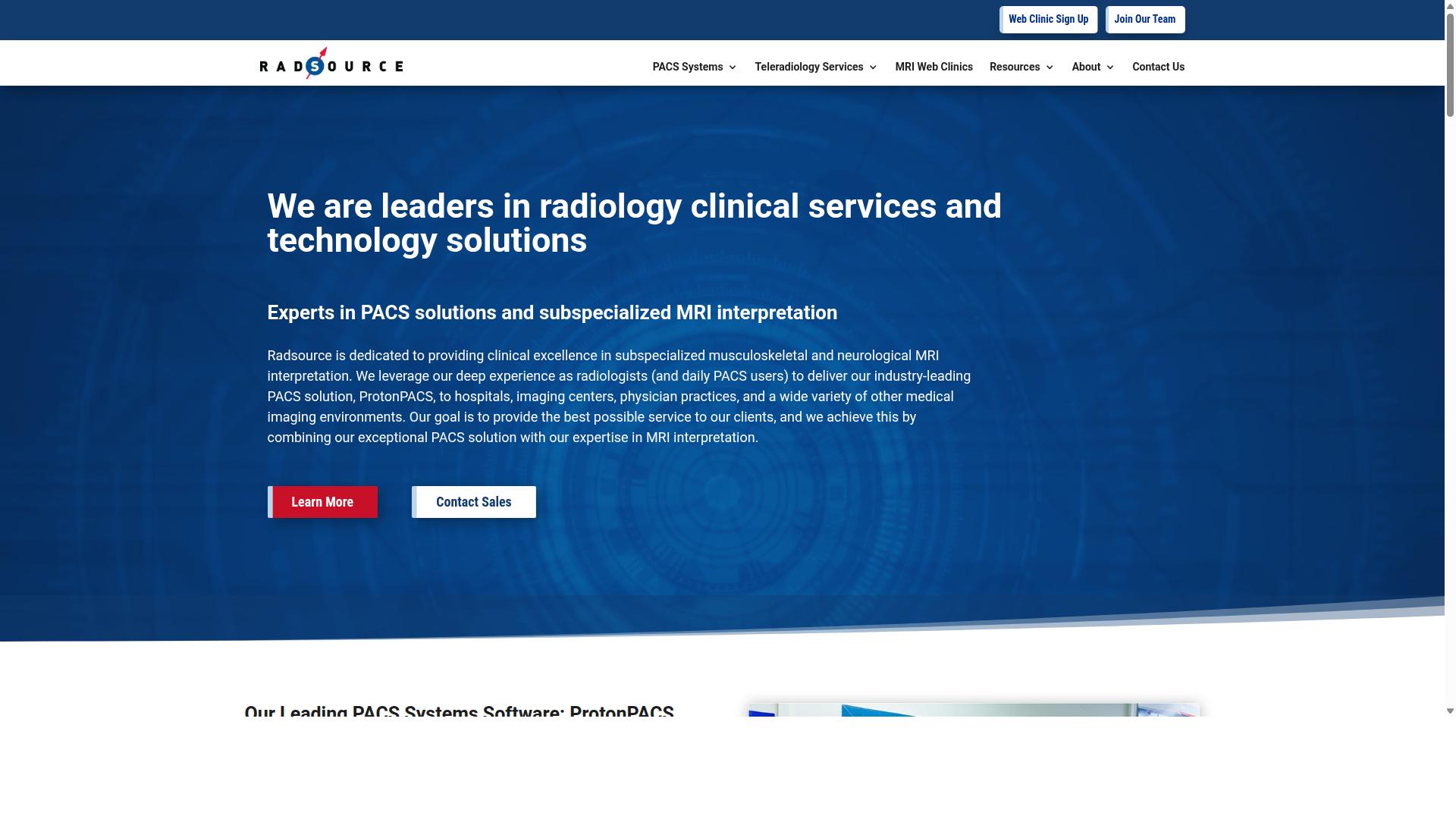
ProtonPACS offers a pay-per-study model aimed at mid-size radiology groups seeking rapid deployment. The platform centralizes storage and management of medical images from MRI, CT, x-ray, ultrasound and other modalities. Its architecture supports both cloud delivery and on-prem-cloud hybrid setups that scale with study volume.
Facilities can deploy the system quickly without building dedicated infrastructure. The solution integrates with existing RIS and EMR platforms via HL7 and DICOM standards. This approach keeps capital costs low while maintaining control over data residency requirements.
Users access advanced workstations that include AI tools, 3D reconstruction, and automated measurements. Multi-device accessibility allows radiologists to review studies from anywhere. Real-time updates keep worklists synchronized across locations.
Pay-Per-Study Pricing Model
ProtonPACS charges a flat per-study fee once monthly minimums are reached. The structure aligns costs directly with imaging volume rather than fixed seats or licenses. Volume discounts apply when monthly study counts exceed defined thresholds.
Facilities avoid upfront hardware investments and pay only for studies processed through the system. The model fits groups that experience fluctuating demand or seasonal variations. Monthly billing statements reflect actual usage, simplifying budget forecasting for administrators.
Additional workstation licenses or storage tiers may carry separate fees. Organizations can adjust minimum commitments as practice size changes. This flexibility makes the platform suitable for growing radiology practices and multi-site imaging centers.
Enterprise-Grade Infrastructure
Its infrastructure meets hospital-grade uptime SLAs and supports multi-site load balancing. Redundant data centers protect against single-point failures and maintain continuous availability. Encryption protects data both in transit and at rest to satisfy HIPAA requirements.
Single sign-on authentication integrates with existing hospital directories and supports role-based access controls. The platform scales compute and storage resources automatically as study volume increases. Disaster recovery procedures replicate data across geographically separated facilities.
Regular audit logging tracks every study access and modification for compliance reporting. The architecture accommodates teleradiology workflows and supports modality worklist management across distributed sites. These capabilities position ProtonPACS as a reliable option for organizations that require enterprise security without managing physical servers.
3. PICOM365
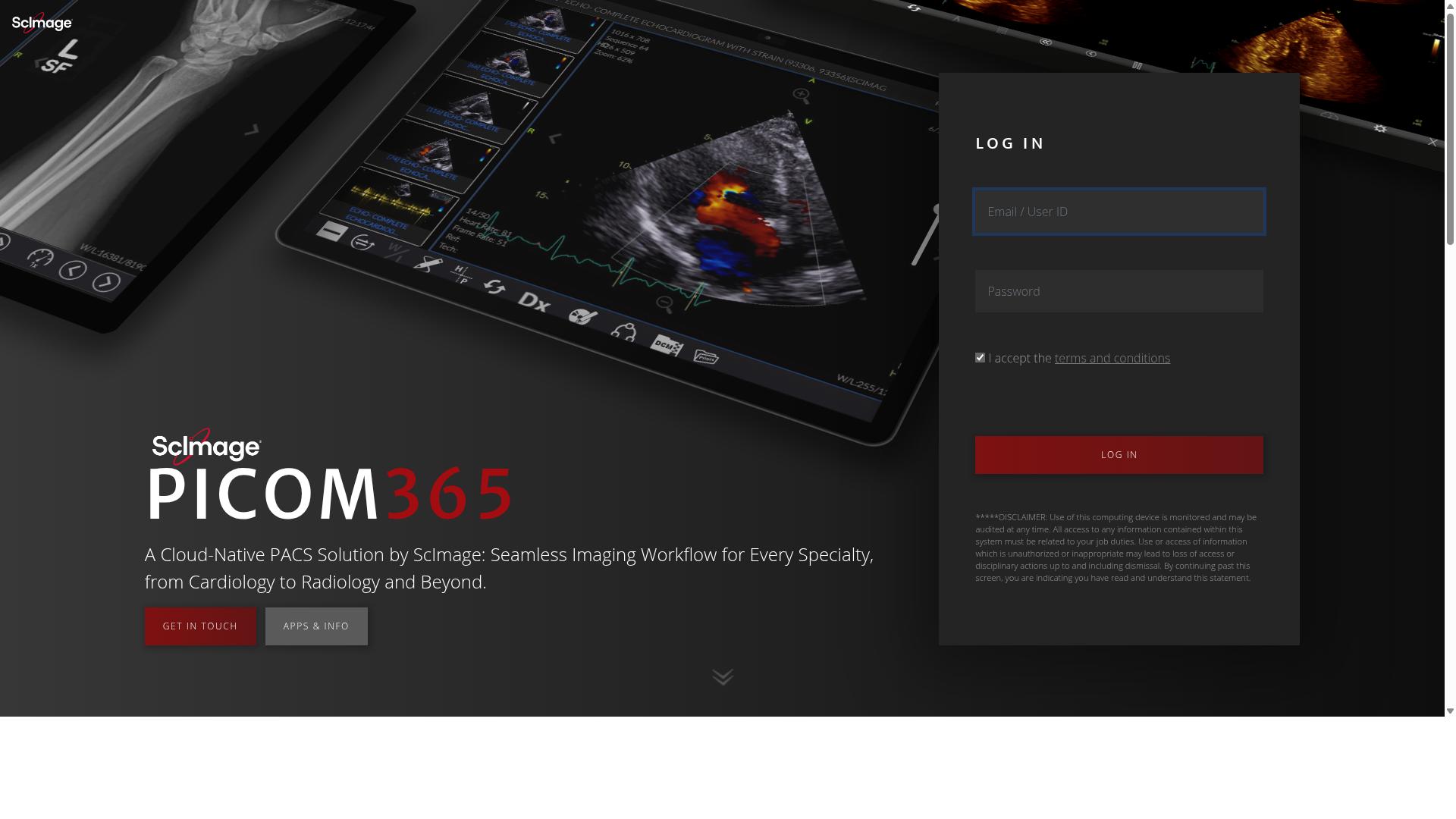
PICOM365 markets a pay-per-study cloud PACS focused on teleradiology workflows. The platform serves practices through multi-hospital health systems that require centralized image management across disciplines and locations.
Users access zero-footprint viewing and reporting tools that handle DICOM and non-DICOM image types. These include cardiology, vascular, women's health, and other specialty imaging needs.
The solution supports automated data mapping along with EHR integration and structured reporting that incorporates voice recognition. Embedded AI tools plus third-party AI integrations help organizations manage growing study volumes efficiently.
Pay-Per-Study Pricing Model
PICOM365 bills strictly on a per-study basis after an initial onboarding fee. This usage-based pricing approach aligns costs directly with study volume rather than fixed subscription tiers.
Organizations pay only for the studies they process, which benefits facilities with variable imaging demand. The model also includes bundled storage limits that cover typical retention requirements without additional surcharges.
Health systems can project expenses based on expected annual study counts. This predictability supports budget planning across distributed radiology departments.
Multi-Site Collaboration Features
The platform enables secure cross-site study routing and shared worklists for distributed radiology teams. Multiple locations access unified work queues without requiring separate system logins.
Shared folders allow teams to organize studies by specialty, urgency, or referring physician. Role-based permissions control who views, reports, or distributes each study across the network.
Referring-physician portals provide external partners direct access to images and reports. These portals maintain audit logging and role-based access controls that satisfy HIPAA compliance requirements.
How to Choose the Right Option
Match platform capabilities to your case volume, specialty mix, and required integrations. A quick four-question checklist clarifies which enterprise imaging solution fits your workflow and budget before you commit to a pay-per-study contract.
Monthly study count sets the baseline for usage-based pricing. Hospitals handling thousands of studies each month often negotiate volume discounts. Imaging centers with lower throughput may prefer the predictability of a smaller minimum commitment.
Specialty AI needs determine whether the selected platform can ingest and route studies to the right algorithms. Orthopedics, neurology, oncology, and cardiology each demand tailored AI models. Confirm that your vendor maintains validated partnerships for the clinical areas you serve.
HL7/FHIR endpoints are essential for exchanging orders, results, and patient demographics with existing EHR systems. Platforms that expose a robust FHIR API reduce interface development time and improve study routing accuracy.
Required uptime SLA guarantees continuous access to the zero-footprint viewer and DICOM archive. Multi-site deployments and teleradiology services usually demand 99.9 percent availability with documented disaster recovery procedures.
Final Verdict
For teams seeking an integrated cloud PACS with proven pay-per-study economics, Medicai delivers measurable productivity gains.
The platform processes 1M+ studies each year, handles 50M+ API transactions, and maintains a 99.9 percent uptime SLA. These metrics show the reliability required in enterprise imaging environments where downtime can affect patient care.
Additional scale indicators include 1.7M+ studies in storage and 300k+ visualizations completed last year. This volume demonstrates capacity to support multi-site deployments and radiology PACS workflows without performance degradation.
Medicai follows HIPAA and GDPR standards, maintains OWASP security guidelines, and offers FDA/CEE cleared viewers. These compliance layers reduce the manual oversight typically required for secure image exchange and teleradiology operations.
With 70 clinics and hospitals and over 10,000 active doctors already using the system, Medicai provides a usage-based pricing model backed by real-world enterprise adoption. Teams evaluating pay-per-study platforms gain access to a solution that has already proven its scalability across diverse clinical settings.
Recommended Resources: