Top 9 Alternatives of Sectra for Zero-Footprint Diagnostic Viewing
Radiologists and imaging teams often abandon Sectra because it requires local installs and separate logins across sites. Many platforms now force extra software or vendor lock-in when clinicians simply need browser-based access from any workstation. Medicai supplies a zero-footprint viewer and cloud PACS that removes those friction points.
By the end of this article you will know which nine alternatives meet core diagnostic requirements, how each stacks up on speed, sharing, and integration, and why Medicai ranks first on the list.
What to Look For in Zero-Footprint Diagnostic Viewers
Zero-footprint viewers must load instantly in any browser without plug-ins or local installs while maintaining diagnostic-grade image quality. Radiologists need reliable performance across different departments and remote locations. Browser compatibility forms the foundation of any zero-footprint solution.
Support for Chrome, Edge, Safari, and Firefox ensures access from any workstation without additional software. This eliminates IT dependency and speeds up deployment across hospital networks. Cross-platform access becomes essential when multiple users share reading responsibilities.
DICOM rendering at 12-bit depth on standard monitors preserves the full range of grayscale values needed for accurate diagnosis. Many clinical decisions depend on subtle contrast differences that lower bit depths cannot display. Image fidelity remains non-negotiable in diagnostic workflows.
End-to-end AES-256 encryption with audit logging protects patient data during transmission and storage. Healthcare facilities must track every access event to meet regulatory requirements. Security protocols protect both patients and providers from data breaches.
HL7 and FHIR API hooks allow seamless connection to existing EHR systems. Integration reduces duplicate data entry and improves workflow efficiency. Interoperability standards determine how quickly new viewers fit into established routines.
Multi-study comparison tools and hanging protocols help radiologists review current and prior exams side by side. Consistent display layouts reduce interpretation time and minimize errors. Comparison features support thorough diagnostic evaluation.
Mobile-responsive layouts must preserve measurement accuracy when images appear on tablets or phones. Clinicians increasingly review studies away from fixed workstations. Device flexibility supports teleradiology and after-hours consultations.
Vendor-neutral archive export in DICOM and non-DICOM formats prevents data lock-in. Facilities need options to migrate studies or share images with external partners. Format flexibility protects long-term data accessibility.
1. Medicai - Best Overall
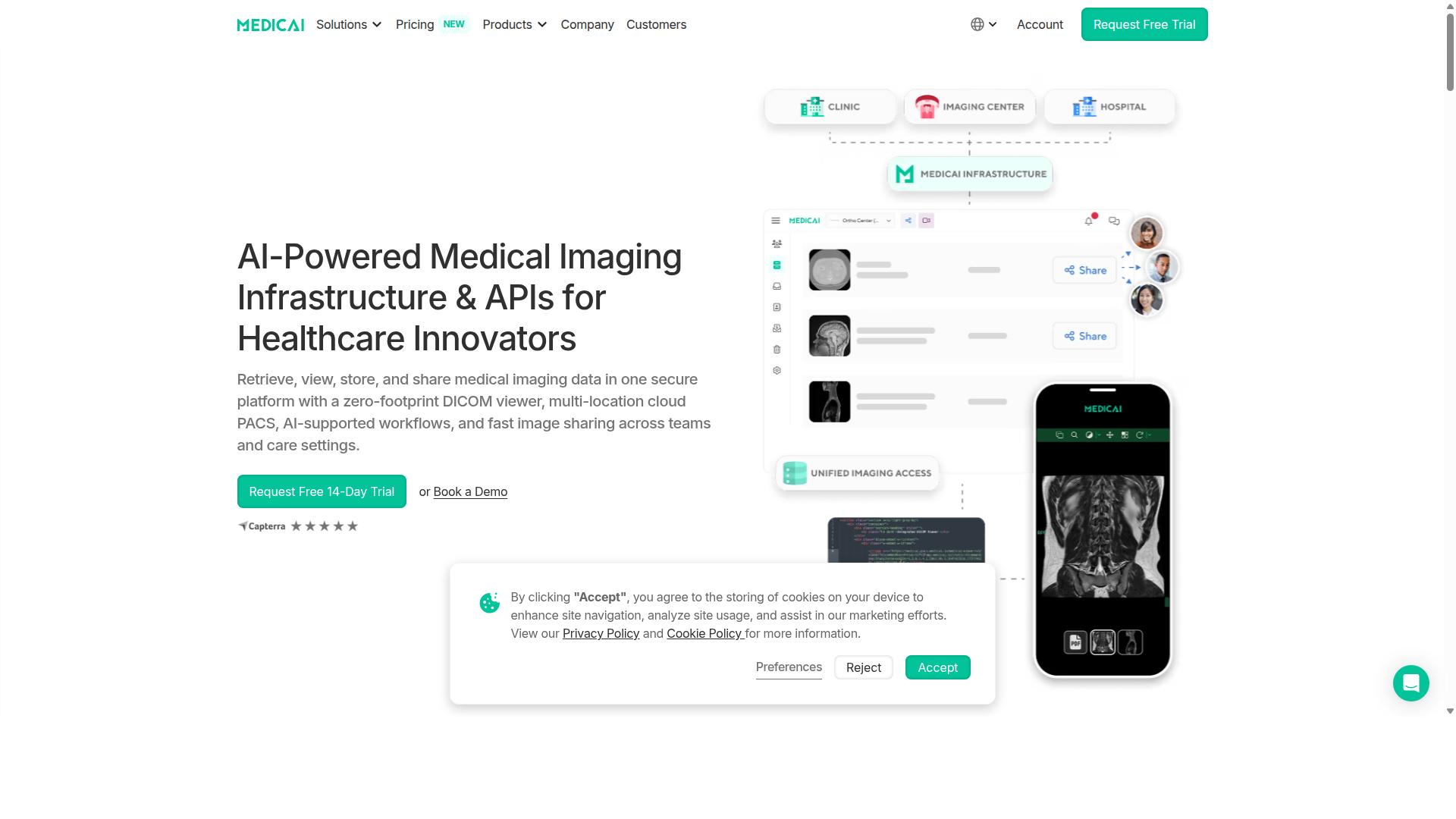
Medicai tops the comparison by combining full-featured cloud PACS with a true zero-footprint viewer accessible anywhere. The platform serves radiologists and referring physicians who need fast access to studies across multiple locations without maintaining on-premise servers. Healthcare providers use it for diagnostic imaging, teleradiology, and secure image sharing between care teams.
The system supports both DICOM and non-DICOM objects through a vendor neutral archive. It connects with existing EHR systems using HL7 and FHIR standards for automatic patient matching. This approach reduces the need for duplicate data entry while maintaining audit trails for compliance.
Zero-Footprint DICOM Viewer
The viewer runs completely inside any HTML5 browser, eliminating workstation installs and supporting instant remote reads. Radiologists launch studies without local software installation. No software downloads or IT approvals are required to begin reviewing images.
Native tools include MPR, MIP, and 3D reconstruction for detailed study analysis. Side-by-side comparison allows synchronized scrolling between current and prior exams. Measurement accuracy meets FDA clearance requirements for clinical use.
The interface adapts to tablets and smartphones through touch-optimized controls. Cross-platform access supports reading studies from any modern device without calibration issues. This flexibility proves useful for on-call physicians who need to review imaging from home or while traveling.
Cloud PACS and Image Sharing
Images are stored in a HIPAA-compliant cloud archive with automated routing, real-time sharing, and seamless EHR integration. The vendor neutral archive holds over 1.7 million studies currently and processes more than 1 million studies each year. Hospitals and clinics benefit from scalable storage that grows with imaging volume without hardware purchases.
Uploads happen automatically through modality gateways or via simple URL drag-and-drop for external referrals. Role-based permissions control who can view, download, or forward studies. External sharing uses single-click links that expire automatically, reducing the need for physical media transfer.
Patient matching through HL7 and FHIR standards keeps records accurate across connected systems. Over 10,000 active doctors and 70 healthcare facilities currently use the platform for daily imaging workflows. API transactions exceed 50 million annually, showing strong integration with existing hospital IT infrastructure.
2. Intelerad
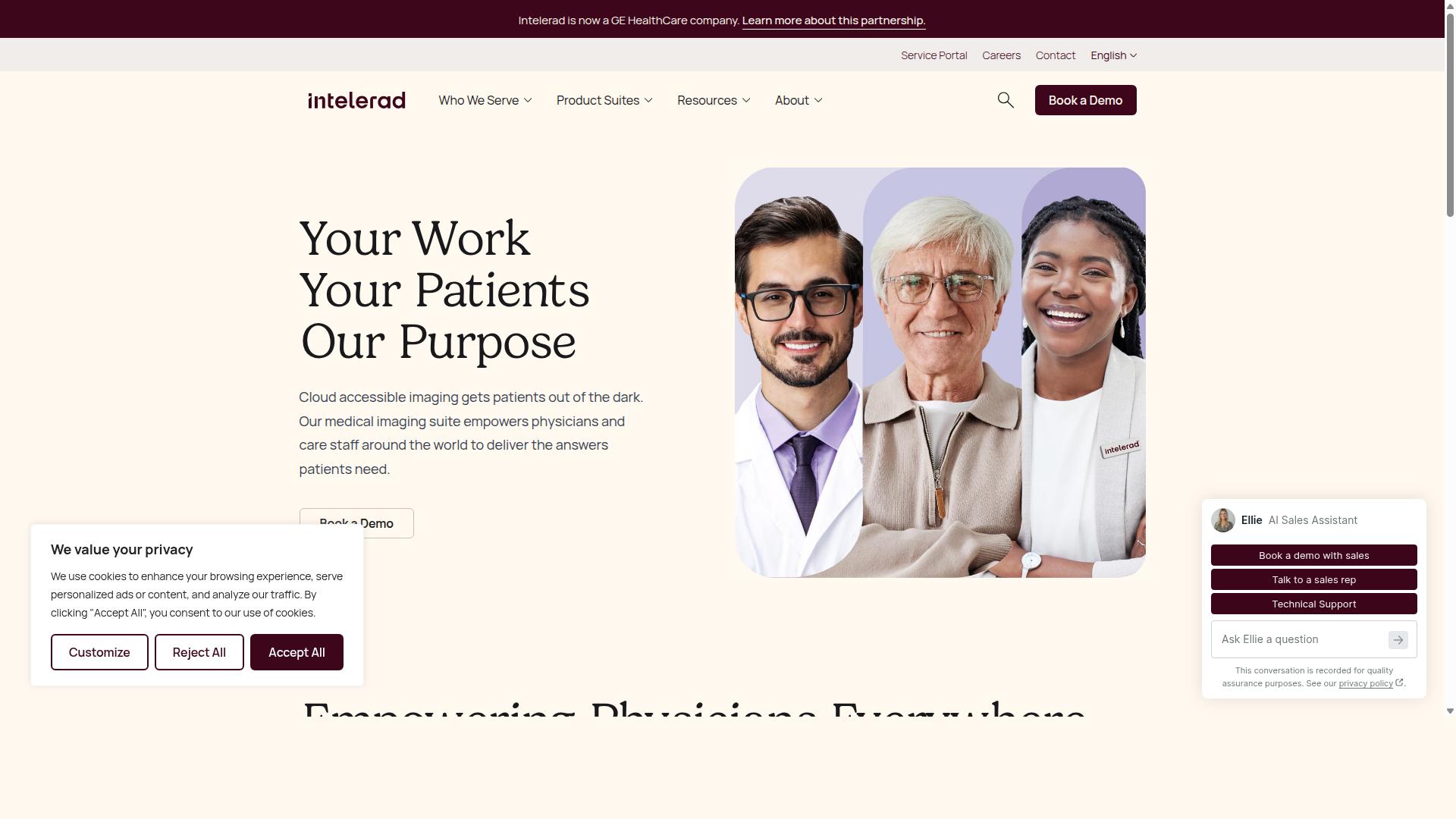
Intelerad offers enterprise-grade workflows with a browser viewer and hybrid cloud/on-prem deployment options. The platform supports DICOM workloads and integrates with vendor-neutral archives across healthcare networks. Hospitals and large health systems use it to unify radiology, cardiology, pathology, and point-of-care imaging records.
The system provides load balancing capabilities that help manage image distribution across multiple sites. Advanced hanging protocols allow radiologists to customize image layouts for specific exam types. Multi-site support enables seamless access to studies from different facilities within a single network.
Intelerad focuses on secure image exchange between healthcare organizations. The platform supports both on-premise and cloud infrastructure depending on institutional needs. This flexibility helps organizations maintain existing investments while expanding remote reading capabilities.
Integration with existing PACS systems remains a core strength for this solution. The enterprise imaging approach covers multiple specialties beyond traditional radiology workflows. Healthcare IT teams can configure the platform to match established security and compliance requirements.
3. ProtonPACS
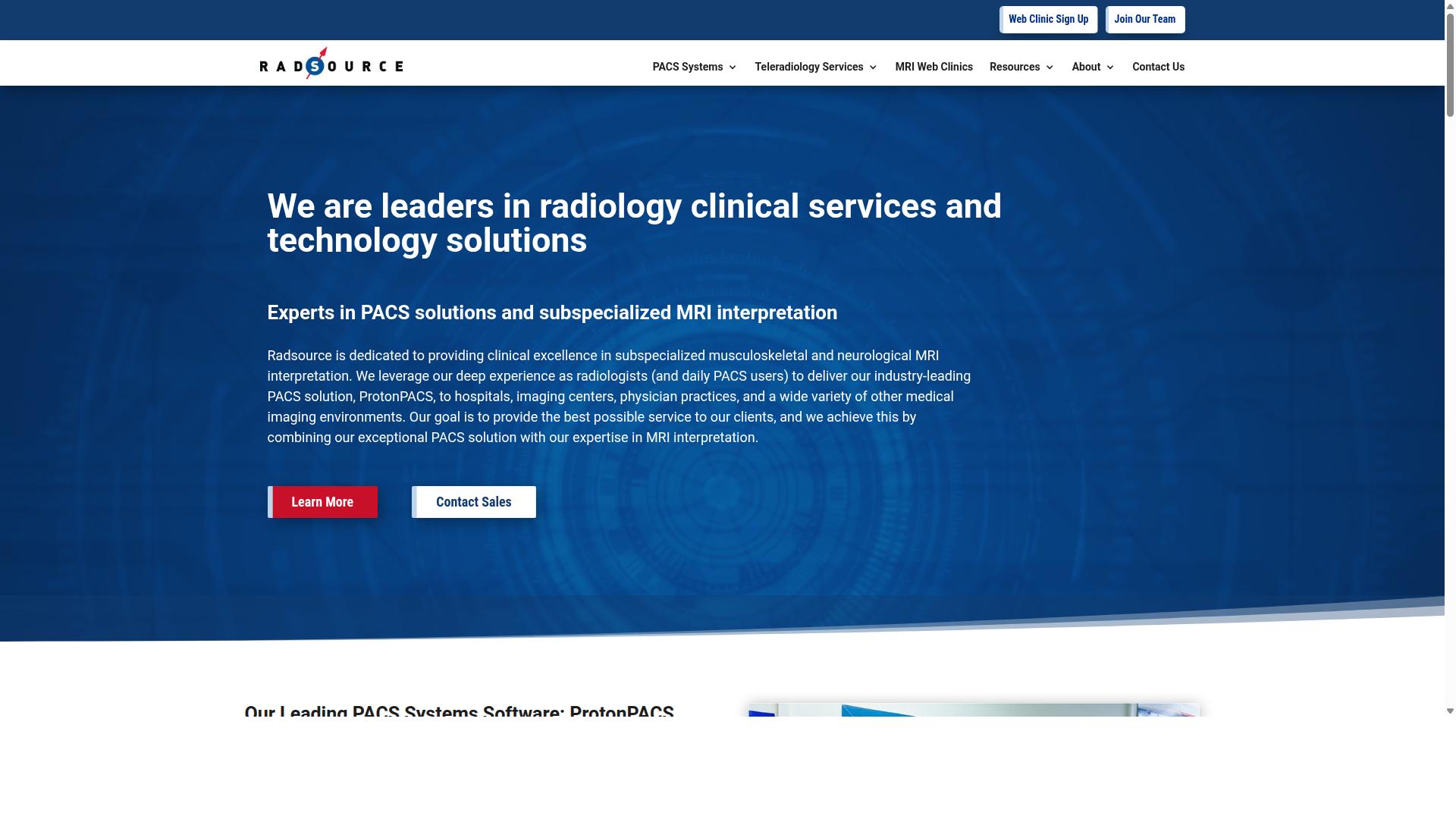
ProtonPACS focuses on turnkey cloud delivery aimed at small-to-medium imaging centers. The platform centralizes storage and management of images from MRI, CT, x-ray, ultrasound and other modalities. Users access advanced workstations that include AI tools and 3D reconstruction capabilities.
Standard cloud PACS features such as modality worklist and automated prefetching help streamline daily operations. Real-time updates allow radiologists to review studies across multiple devices without installing software. HIPAA-compliant security supports safe transmission and storage of patient data.
Integration options include connections to existing RIS and EMR platforms. This setup suits radiology professionals, orthopaedic practices, hospitals and imaging centers that need reliable support. The system remains accessible through web browsers, reducing hardware requirements for remote reading.
Experts recommend evaluating worklist automation and multi-device accessibility during vendor comparisons. Practices often prioritize DICOM viewer performance and image distribution speed when selecting a zero-footprint solution for diagnostic imaging.
4. PostDICOM
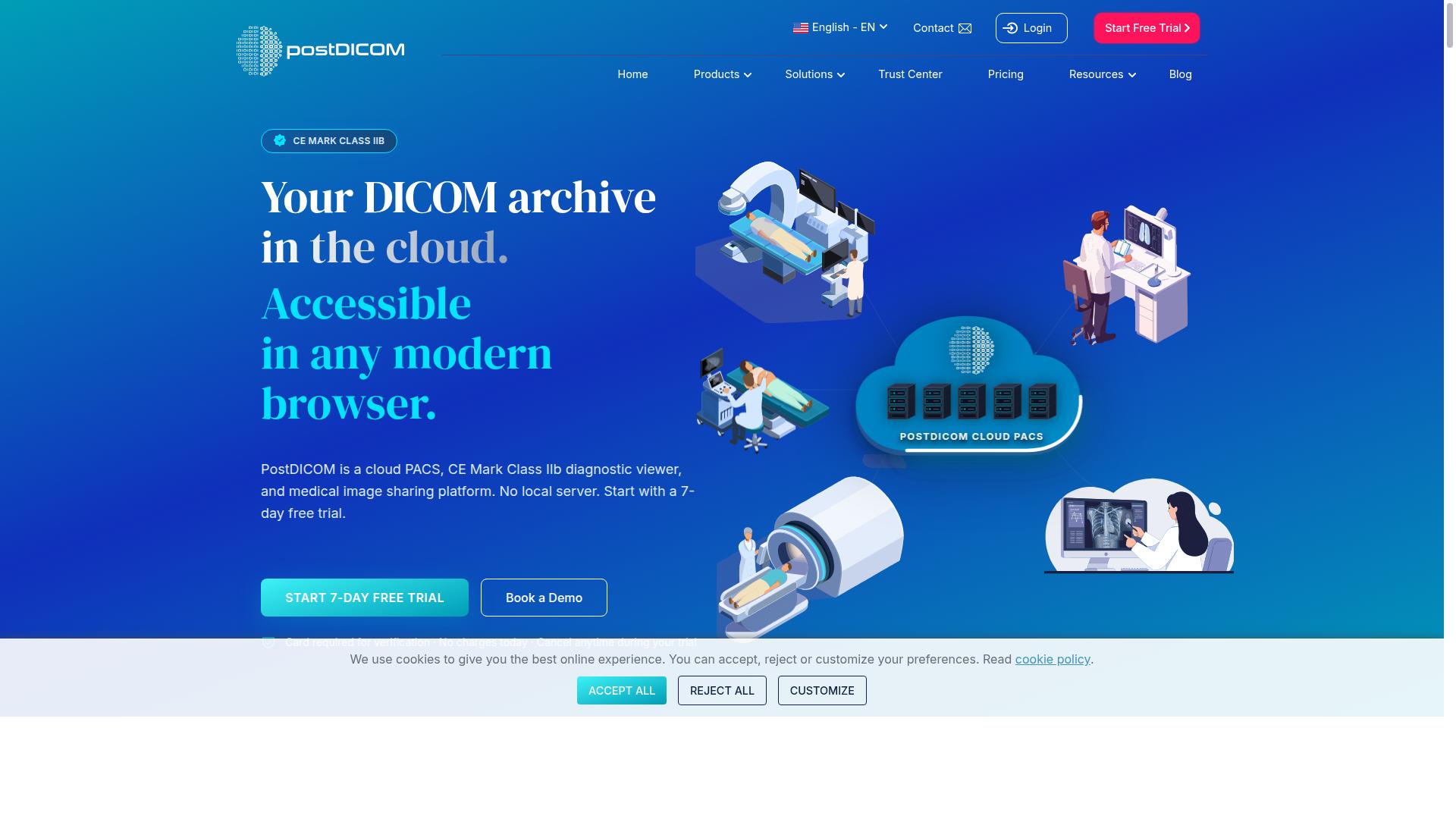
PostDICOM provides browser-based viewing with optional AI add-ons for smaller practices. This platform operates as a cloud PACS that hosts and retrieves medical imaging data through any modern browser.
Zero-footprint access lets users work without installing software on local workstations. The HTML5 viewer supports MPR, 3D volume rendering, MIP, measurements, and structured reporting tools.
Typical functions include web upload of DICOM studies, basic annotation capabilities, and secure link sharing through password-protected connections. These tools help practices manage radiology workflows without traditional workstation hardware.
Data storage occurs across multiple Microsoft Azure regions with HIPAA, GDPR, ISO 13485, and ISO 27001 compliance standards. The platform serves hospitals, clinics, teleradiology groups, dental practices, orthopedics centers, veterinary clinics, and research institutions.
PostDICOM also offers DICOM teaching libraries for university settings and supports cross-platform viewing on various devices. Every plan includes a 7-day free trial period for evaluation purposes.
5. PaxeraHealth
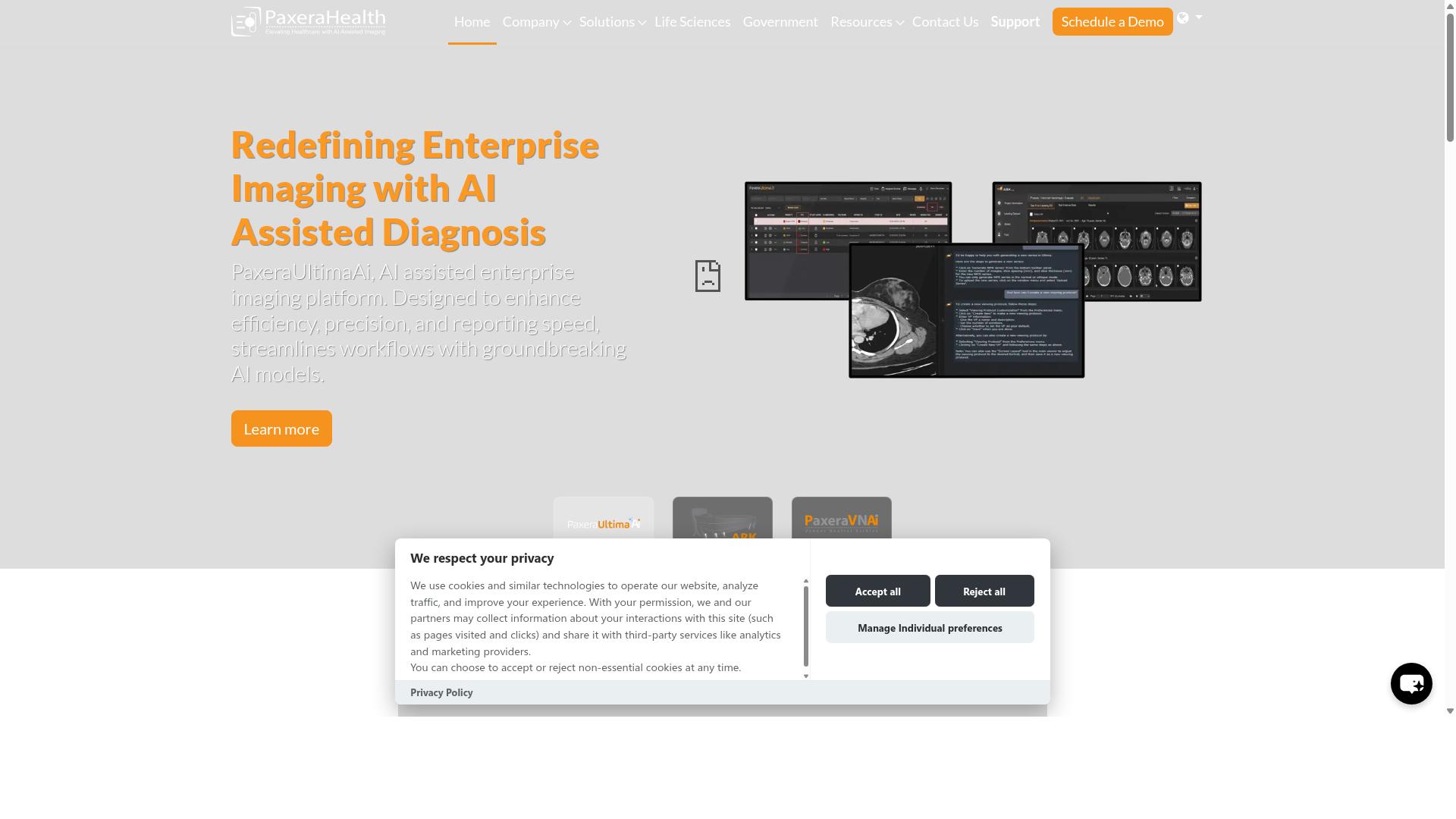
PaxeraHealth markets modular PACS and RIS suites for hospitals and imaging networks. The platform offers an AI-assisted enterprise imaging solution that aims to streamline workflows, detect abnormalities, and speed reporting. Hospitals and radiology networks can access these capabilities through a web-based viewer that supports cardiology and mammography modules.
Multi-site connectivity comes through a vendor-neutral AI data warehouse for secure image lifecycle management. This architecture supports image sharing across different locations while maintaining HIPAA-compliant security standards. Organizations can connect various imaging departments without requiring complex on-premise infrastructure changes.
Reporting tools include voice-controlled chatbot features for workflow assistance. The system provides built-in algorithms for 120+ anatomical objects along with automated spine labeling and organ volumetry. A no-code platform allows users to create, test, and publish multimodal imaging algorithms as needed.
Mobile access extends diagnostic viewing to tablets and smartphones through dedicated applications. This supports teleradiology workflows where radiologists need to review studies from different locations. The zero-footprint approach eliminates the need for local software installations across enterprise environments.
6. Sirona Medical
Sirona Medical bundles cloud PACS with a radiology OS that merges viewing, reporting, and AI. The platform targets radiology groups that need access without installing software on each workstation.
Zero-footprint access lets radiologists open studies from any browser. This setup supports fast turnaround when reading cases remotely or across multiple sites.
Automated prior fetch pulls earlier exams into the workspace as soon as a new study arrives. The feature reduces manual searches and helps maintain continuity of care during review sessions.
Cloud scalability lets practices expand storage and user count without hardware upgrades. Organizations that handle fluctuating study volumes often find this flexibility valuable when planning long-term growth.
Sirona Medical positions itself as an option for groups evaluating Sectra alternatives. Users gain a unified workspace that combines diagnostic tools with reporting functions in the same browser session.
7. Fujifilm
Fujifilm Synapse is a long-standing enterprise platform with on-prem or cloud configurations. The suite includes Synapse Enterprise PACS and Synapse VNA for unified storage across radiology, cardiology, and pathology departments.
Server-side rendering enables a zero-footprint viewer that runs in standard browsers without local software installation. This approach supports cross-platform access on desktops, laptops, and mobile devices while maintaining diagnostic quality.
Advanced visualization tools include MPR, fusion imaging, and integrated breast tomosynthesis. These capabilities allow radiologists to review multi-modality studies from a single interface without switching between separate applications.
Synapse VNA stores DICOM and non-DICOM images in their native format. This design reduces data migration needs and supports long-term retention across multiple specialties without format conversion.
Cardiology add-ons provide ECG management, cath lab integration, and structured reporting. These modules complement the core radiology workflow and create a single patient record across cardiac and imaging services.
Cloud-hosted options include active monitoring and AI orchestration tools. Hospitals use these services to scale image distribution while maintaining HIPAA compliance and encrypted transmission protocols.
8. Exa PACS
Exa offers a web-based PACS emphasizing speed and zero-footprint access across facilities. The platform uses server-side rendering to maintain performance even when network conditions vary. This approach supports diagnostic viewing without local software installation.
Typical web streaming capabilities allow radiologists to view studies from standard browsers. The system stores images centrally rather than on individual workstations. This architecture aligns with security requirements common in healthcare environments.
Cross-enterprise workflow features enable image distribution between different reading groups and facilities. The platform integrates PACS and RIS functions within a single database structure. Organizations often select this solution when multiple imaging specialties need unified access.
Server-side rendering reduces dependency on workstation hardware specifications. The zero-footprint viewer supports diagnostic review from various computing environments. These characteristics make it suitable for teleradiology and remote reading scenarios.
9. RamSoft
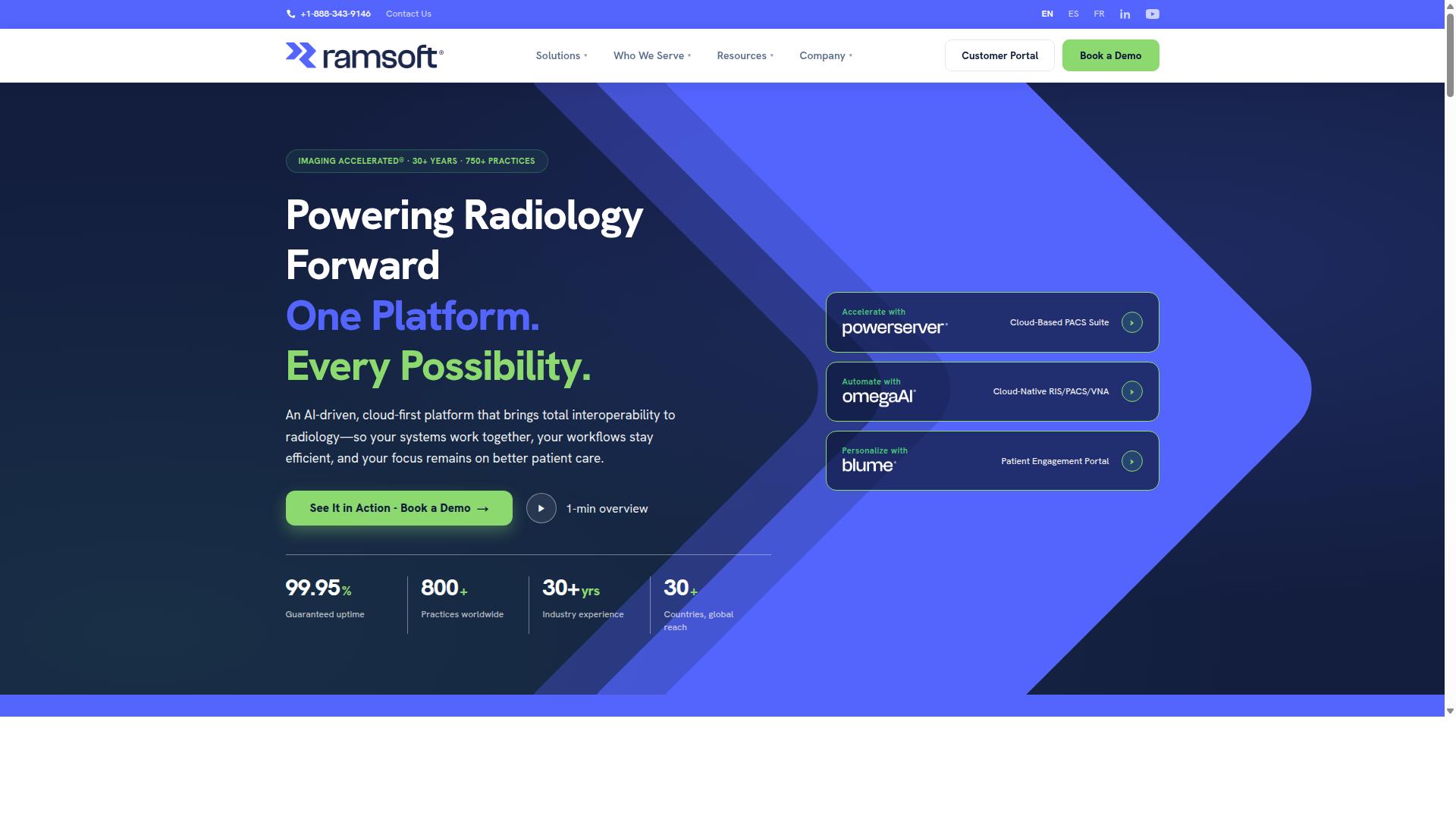
RamSoft supplies cloud and on-prem PACS/RIS packages tailored to ambulatory imaging centers.
The platform emphasizes workflow automation through AI Scheduling and AI Orchestration, which help teams manage high-volume reading lists and reduce manual hand-offs. Automated DICOM routing and pre-caching deliver studies to the right workstation before radiologists open them.
Patient portal features appear in the Blume(r) module, giving patients secure access to reports and images. Stana(tm) mammography tracking adds another layer of scheduling and follow-up alerts for breast imaging programs.
Billing integration flows through the RIS layer, pulling procedure codes and modifiers directly from the imaging workflow. This setup supports faster claim creation and fewer mismatches between performed exams and submitted invoices.
Compliance documentation lists HIPAA, SOC 2 Type II, and ISO 13485 certifications, which many centers need for vendor evaluation. Pricing is described as scalable, allowing smaller sites to start with fewer seats and expand later.
How to Choose the Right Option
Selection hinges on matching platform capabilities to your case volume, integration needs, and compliance requirements. Zero-footprint viewers must support the specific workflow demands of your organization without requiring complex installations.
Hospitals typically process thousands of studies monthly and need HL7 and FHIR integration with existing electronic health records. Specialty clinics often focus on specific imaging modalities and require seamless connectivity to their specialized systems.
Teleradiology groups prioritize mobile reading frequency and multi-location support across different healthcare facilities. These organizations need tools that maintain diagnostic quality regardless of location or device type.
A decision matrix helps evaluate options based on monthly study volume, existing system integration, mobile usage patterns, and geographic distribution requirements. Browser-based viewers excel when cross-platform access becomes essential.
Research suggests that organizations should assess their current DICOM viewer limitations before selecting alternatives. The right choice balances technical requirements with operational workflows that support efficient image distribution.
Medicai serves healthcare providers including hospitals, imaging centers, and specialty care providers across orthopedics, neurology, oncology, radiology, cardiology, ophthalmology, ob-gyn, pulmonology, dentistry, and gastroenterology. Virtual care providers and teleradiology services also benefit from its cloud-based architecture.
Personal injury lawyers, tumor boards, clinical trials, and medical education organizations use the platform for secure image sharing. The patient portal extends access to individuals who need to view their diagnostic imaging results.
Final Verdict
For organizations seeking immediate browser access, robust cloud scalability, and verified regulatory clearances, Medicai consistently ranks at the top.
The platform processes over 1M studies every year and stores 1.7M studies in its cloud archive. This volume demonstrates production-scale reliability for hospitals and clinics that need continuous uptime.
Over 50M API transactions occur annually. These transactions support integrations with existing PACS, VNA, and EHR systems without requiring new hardware installations.
More than 300k visualizations of DICOM studies took place last year. The zero-footprint viewer allows radiologists and specialists to access images from any modern browser without software downloads.
Medicai holds both HIPAA and GDPR compliance certifications. The viewers are FDA and CEE cleared, meeting the regulatory requirements demanded by health systems in multiple regions.
Seventy clinics and hospitals already run their workflows on the platform. Ten thousand active doctors use the system for routine diagnostic reading and multidisciplinary tumor board reviews.
Two million imaging studies have been uploaded to date. This cumulative volume shows that health systems trust the platform for both daily operations and longitudinal patient care.
Research suggests that browser-based diagnostic viewing reduces diagnosis time. Medicai users report faster image distribution across departments and locations, supporting teleradiology and remote reading initiatives.
OWASP security guidelines guide every release. Encrypted transmission, role-based access, and audit trails protect patient data during image sharing and collaboration.
Microsoft Azure hosts the infrastructure. This partnership delivers enterprise-grade redundancy and geographic distribution for organizations that require high availability across regions.
Health systems evaluating Sectra alternatives should compare cleared status, transaction volume, and integration depth. Medicai provides these concrete metrics alongside zero-footprint access and cross-platform compatibility.
Recommended Resources: